Introduction
The internet is full of websites that promise to teach you something new, but very few actually make learning feel easy. That is exactly why so many students, teachers, and curious readers have started talking about Pushwiki com. It is a knowledge-sharing website that turns confusing topics into short, clear guides that almost anyone can follow, no matter their age or background.
If you searched for this platform because you saw it mentioned online, you are probably wondering what it actually offers, whether it is trustworthy, and if it is worth your time in 2026. This article answers all of that in plain, simple language. We will look at what the site covers, how it is organized, who it helps the most, and what to keep in mind before relying on it for serious research. By the end, you will have a clear, honest picture of this learning resource and how it fits into the bigger world of online education.
What Is This Platform?
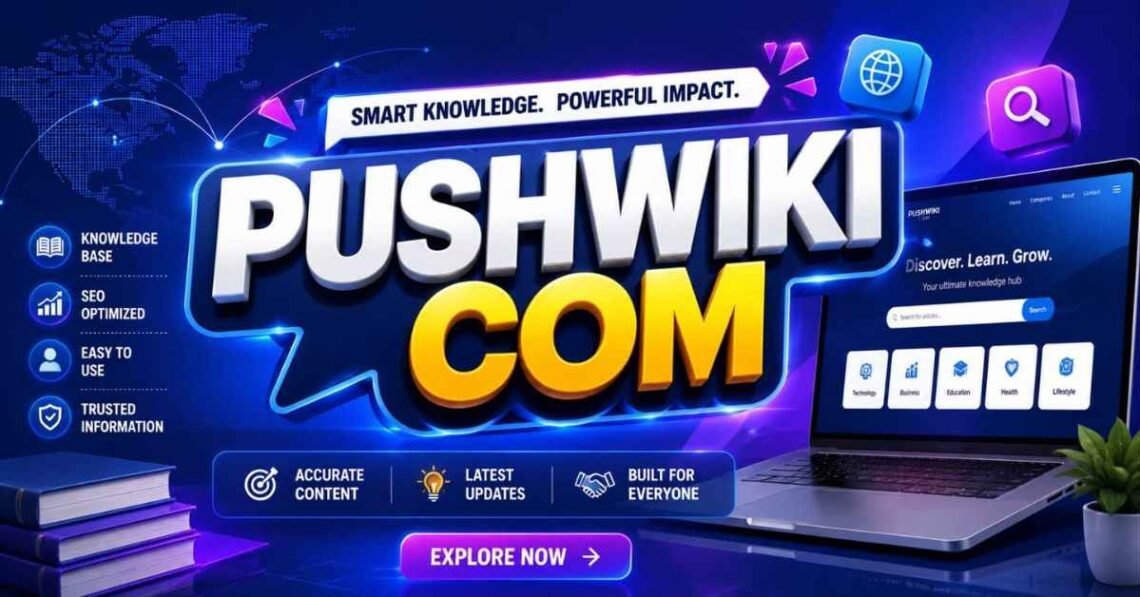
Pushwiki com is an online educational platform that publishes short, structured articles on topics like technology, digital learning, business basics, and everyday skills. Instead of long, complicated essays, it breaks each subject into small, readable sections with headings, lists, and simple examples.
Think of it as something between a traditional encyclopedia and a modern how-to blog. It borrows the organized, topic-based style of a wiki, but it writes in a friendly, conversational tone that feels more like a helpful teacher than a textbook. This makes it useful for people who want quick answers without digging through pages of technical jargon.
The site does not try to be the single authority on every subject. Instead, it works as a starting point — a place where a reader with little background knowledge can understand the basics of a topic before deciding whether they need deeper, more specialized sources.
For learners in middle school, high school, and even early college, this kind of simplified content can be genuinely helpful. It respects the reader’s time and does not assume prior expertise. A student researching a school project or a parent helping with homework can both get value from the same page, because the explanations are written for a general audience rather than for experts only.
Why Students and Everyday Learners Are Talking About It
Online learning habits have changed a lot in the last few years. Fewer people want to click through ten tabs to piece together one answer. Instead, they want one clear source that explains an idea from start to finish, using everyday words instead of technical jargon.
Middle school and high school students benefit the most from this style. Many textbooks and academic websites are written at a level that assumes a lot of background knowledge. A site built around clarity instead of complexity can bridge that gap, especially for students still building confidence in reading dense material.
Busy professionals appreciate it too. Someone learning about a new digital tool for work does not always have time for a thirty-minute deep dive. A short explanation that covers the basics in five minutes is often exactly what they need before moving on with their day, which is part of why interest in this kind of resource keeps growing through 2026.
Key Features That Make It Useful
Several design choices make this type of platform stand out from older, more traditional information sites.
Clear structure. Articles are usually divided into short sections with descriptive headings, so readers can scan for the part they need instead of reading everything from top to bottom.
Plain language. Technical terms are explained the moment they appear, rather than assumed to be common knowledge. This is a small detail, but it makes a big difference for beginners.
Topic variety. Content spans several categories, including technology, digital marketing basics, business concepts, and general education, so one visit can lead to learning about several related ideas.
Mobile-friendly reading. Since most readers now browse on phones, short paragraphs and clear headings help content stay easy to read on a small screen.
Beginner-first approach. Rather than assuming the reader already knows the subject, explanations usually start from the basics and build up gradually.
Together, these features create a reading experience that feels approachable rather than overwhelming. No single feature is unique to one website, but what matters most is how consistently a site applies these habits, since that consistency is where quality varies the most between platforms.
How the Content Is Organized
Good structure is what separates a genuinely useful learning resource from a pile of disconnected articles. Content on this type of platform is typically grouped into categories, and within each category, related topics are linked together.
For example, an article about search engine optimization might connect to related pieces on content writing, keyword research, or website traffic. Instead of treating each topic as an island, the goal is to build a small web of connected ideas so a curious reader can naturally move from one concept to the next.
This approach, sometimes called a “topic cluster,” has become common across educational websites because it helps both readers and search engines understand how ideas relate to one another. For a student, it means starting with a simple definition and gradually building toward a fuller understanding without losing track of where they started.
This kind of organization works best when the underlying content is accurate and regularly checked. Structure alone does not guarantee quality — it just makes good content easier to find. Readers should still look for signs of careful editing, such as consistent formatting and articles that reference verifiable information rather than vague claims.
Educational Value and E-E-A-T Standards
Google’s E-E-A-T guidelines — which stand for Experience, Expertise, Authority, and Trust — are a useful lens for judging any educational website, and they apply well here too.
Experience means the content should reflect real, practical understanding rather than guesses. A well-written guide should sound like it comes from someone who has actually used the tools or followed the process being described.
Expertise refers to accuracy and depth. Even simplified explanations need to be factually correct, and any specific claim should be something a reader could verify elsewhere if they wanted to double-check it.
Authority builds over time as a site earns recognition for covering a subject well and consistently. New platforms naturally need time to build this kind of reputation.
Trust ties everything together. A trustworthy site is transparent about who writes its content, corrects mistakes when they are found, and does not exaggerate claims to attract clicks.
When evaluating Pushwiki com or any similar platform against these standards, readers should look for clear authorship information, visible update dates, and a writing style that explains reasoning rather than just stating conclusions. Sites that meet these standards tend to be more reliable long-term learning companions, especially for students who are just beginning to research a topic.
Where This Platform Fits Among Digital Learning Resources
There is no shortage of places to learn something new online, from university websites to video platforms to community forums. A simplified knowledge hub fits into this landscape as a first step rather than a final destination.
For deep academic research, official sources such as university publications or government education resources remain the gold standard. The U.S. Department of Education and similar national bodies consistently encourage learners to combine easy-to-read introductory material with more rigorous, specialized sources as their understanding of a subject grows.
This is the healthiest way to use any simplified learning site: as a launching pad. Read the simple explanation first to build a mental map of the topic, then move to textbooks or expert-reviewed sources when the subject needs deeper accuracy — for example, in science, law, medicine, or financial decisions. Used this way, it becomes a helpful companion to formal education rather than a replacement for it.
Benefits for Students, Teachers, and Self-Learners
Different types of readers get different value from this kind of resource.
Students can get a quick overview before a class discussion or clarify unfamiliar vocabulary in a homework assignment, using it as a supplement rather than a substitute for classroom learning.
Teachers sometimes use simplified explanations to introduce a topic before assigning textbook material, especially for students who need an easier entry point.
Self-learners teaching themselves a new skill outside of school often benefit the most, since they do not always have a teacher available to answer basic questions.
Parents helping with homework can use these guides to refresh their own understanding before explaining a topic to a child in their own words.
Across all these groups, the shared benefit is time saved. Pushwiki com, along with similar platforms, is part of a broader trend where accessible writing is treated as seriously as accurate writing, because information nobody can understand is not very useful information at all.
Common Challenges and Limitations to Keep in Mind
No learning platform is perfect, and it is worth being realistic about the limitations of simplified content.
Because these guides prioritize clarity over depth, they are usually not detailed enough for advanced coursework, certification exams, or scientific research. A general overview is a starting point, not a complete education on the subject.
There is also the ongoing challenge of keeping information current. Technology and digital marketing change quickly, and content that is not regularly reviewed can become outdated within a year or two, so it is worth checking the last-updated date before treating an article as current.
Finally, because many sites in this space cover a wide range of topics, quality can vary from one article to the next. Being aware of these limitations does not mean avoiding simplified resources — it just means using them wisely, cross-checked against more specialized sources when a topic really matters.
Tips to Get the Most Out of a Learning Platform Like This
A few simple habits help readers get more value from any general knowledge website.
First, use it to build a foundation, not a final answer — read the simple version to learn the basic vocabulary, then move to deeper sources for schoolwork, a job, or an important decision.
Second, check publication dates, since fast-changing fields like technology can shift within months.
Third, cross-reference important facts with a recognized institution or expert publication if a claim seems surprising or especially important.
Fourth, take notes in your own words rather than copying text directly, which also helps avoid accidental plagiarism in schoolwork.
Fifth, explore related topics through internal links, which can turn a single search into a much broader understanding of a subject.
The Future of Simplified Learning Platforms
The demand for clear, accessible information is not going away — if anything, it is growing. As more people learn through phones rather than desktops, short, well-organized content will likely keep gaining ground over long, dense academic writing.
Artificial intelligence is also changing how these platforms operate. Many sites now use AI tools to help organize research or suggest related topics, though human review remains essential for accuracy and trustworthiness. Interactive features like quizzes and short videos may become more common additions to text-based explanations, and some platforms are experimenting with reader-suggested corrections, similar to how traditional wikis operate.
Whatever direction the industry takes, the core idea behind Pushwiki com and similar sites is likely to stay the same: making information easier to understand without making it less accurate.
Quick Overview: Key Facts at a Glance
The table below summarizes the main categories and features commonly associated with this type of platform, making it easier to see the full picture at a glance.
| Category | What It Typically Covers | Best Suited For |
| Technology | Software basics, AI tools, digital gadgets | Beginners exploring new tools |
| Education | Study tips, subject overviews, learning strategies | Students and self-learners |
| Business | Startup basics, management concepts | New entrepreneurs |
| Digital Marketing | SEO basics, content strategy, branding | Small business owners |
| Everyday Topics | General how-to guides and explainers | Casual readers |
How Simplified Platforms Compare to Traditional Research Sources
This second table highlights the practical differences between a general knowledge site and traditional academic research, helping readers decide which one fits their current need.
| Factor | Simplified Knowledge Platforms | Traditional Academic Sources |
| Reading level | Grade 7–9 friendly | College level or higher |
| Speed of understanding | Fast, usually under 10 minutes | Slower, requires deep reading |
| Depth of detail | Overview level | Highly detailed and specialized |
| Best use case | Getting started on a topic | Formal research or citations |
| Update frequency | Varies by site | Peer-reviewed, but slower to publish |
As the table above shows, the two formats are not competitors — they serve different stages of the learning process. Even research-focused institutions like MIT OpenCourseWare often pair short, plain-language overviews with deeper technical material, which suggests the smartest approach is to read the simplified version first and turn to formal research second.
Frequently Asked Questions (FAQs)
Is Pushwiki com free to use?
Yes, the content is publicly accessible without a subscription, similar to most blog-style educational websites.
Is it suitable for school projects?
It works well as a starting point for background research, but students should confirm key facts with a teacher-approved or academic source before citing them.
Does it cover only technology topics?
No, the platform publishes content across several categories, including education, business, and digital marketing, not just technology.
How often is the content updated?
This can vary by article, so it is best to check the published or last-updated date shown on each page before relying on it for current information.
Is it a replacement for textbooks or teachers?
No, it works best as a supplement that introduces a topic simply, while textbooks and teachers remain the primary source for structured, in-depth learning.
Conclusion
Pushwiki com fits into a growing category of websites built around one simple idea: information should be easy to understand, not just easy to find. For students building background knowledge, professionals learning a new tool, or parents helping with homework, this kind of platform can genuinely save time and reduce frustration.
At the same time, it works best as a starting point rather than a final authority. Pair it with textbooks, teacher guidance, or specialized academic sources whenever accuracy really matters, especially for graded schoolwork or important decisions. Used this way, it becomes a helpful companion in your learning routine rather than your only source of information.
If you are exploring digital learning tools this year, take a few minutes to browse a couple of articles on the site, compare them with a source you already trust, such as Khan Academy or a resource listed on Education.gov, and see whether the simplified explanations genuinely help the topic click for you. That small comparison is often the fastest way to judge whether any learning website deserves a permanent spot in your study routine.